
Conservation and Hydrophobicity
Compare the pictures below to see the distribution of the conserved residues and their hydrophobicity!
Spot 🔔 for key points
More conserved hydrophobic residues at IML3:CHL4 (L:N)
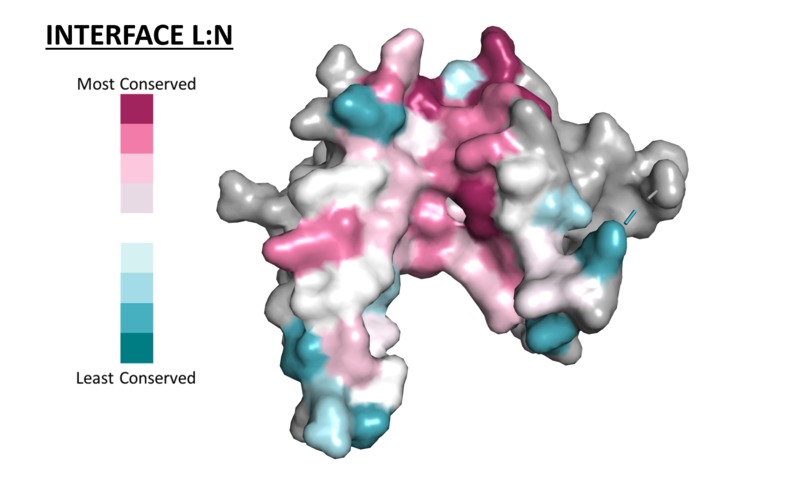
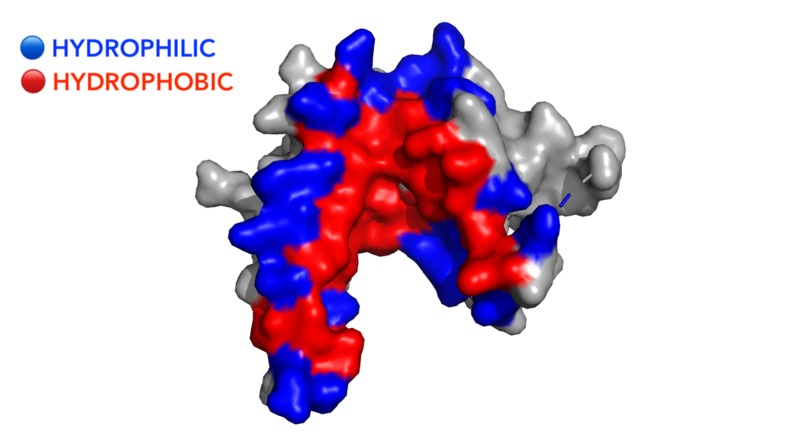
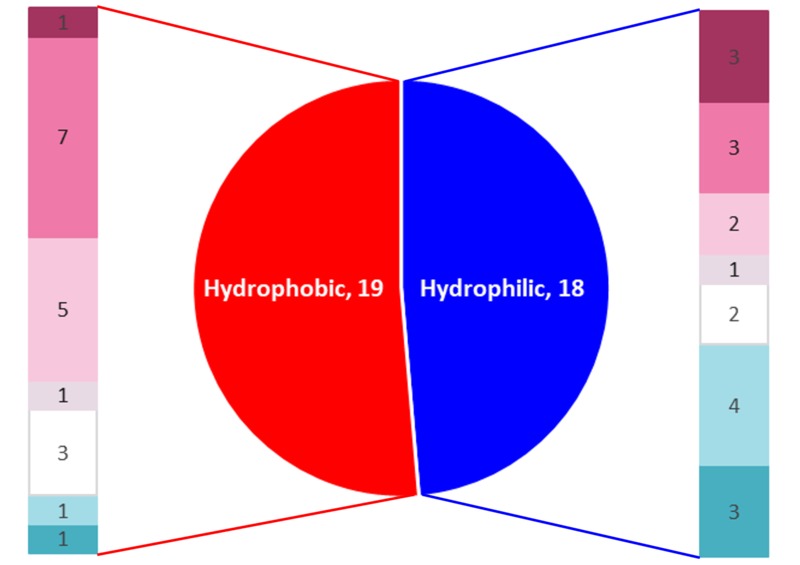
At this interface, the major site of conservation can clearly be seen to be the deepest region of the groove, where most of the hydrophobic amino acids reside. Therefore, unsurprisingly, more hydrophobic residues are conserved.
In contrast, most of the highly to well conserved amino acids in CHL4 (Cenp-N) C-terminal are hydrophilic. They account for 75% of the most conserved residues.
🔔 More hydrophobic residues are conserved at this interface but hydrophilic residues account for the majority of most conserved amino acids.
High conservation of hydrophilic residues at CHL4:MCM21 (N:O)
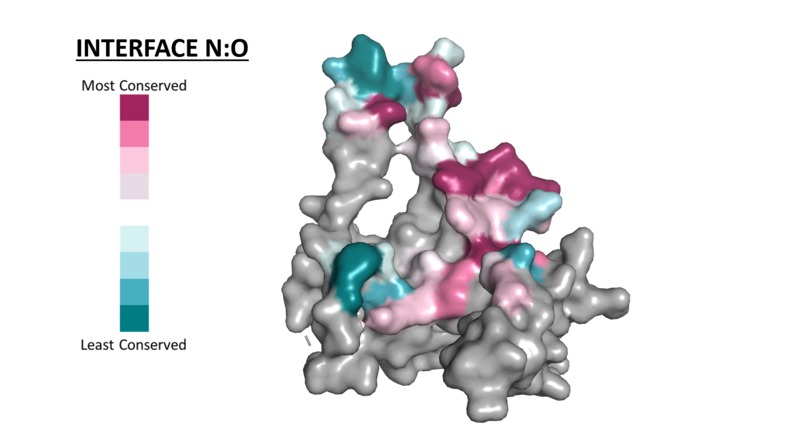
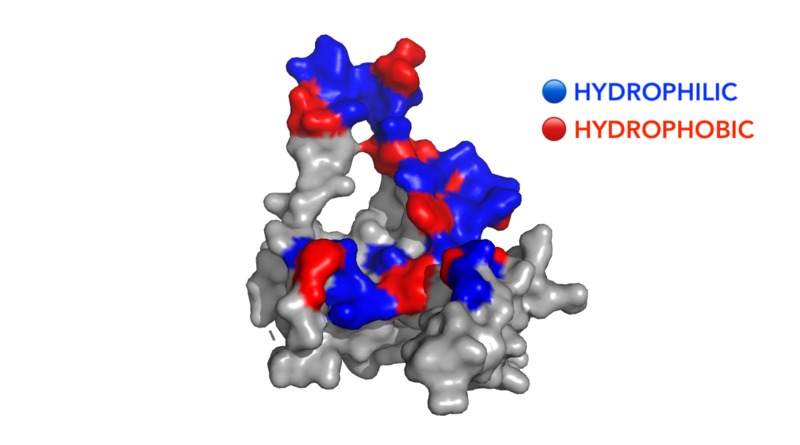
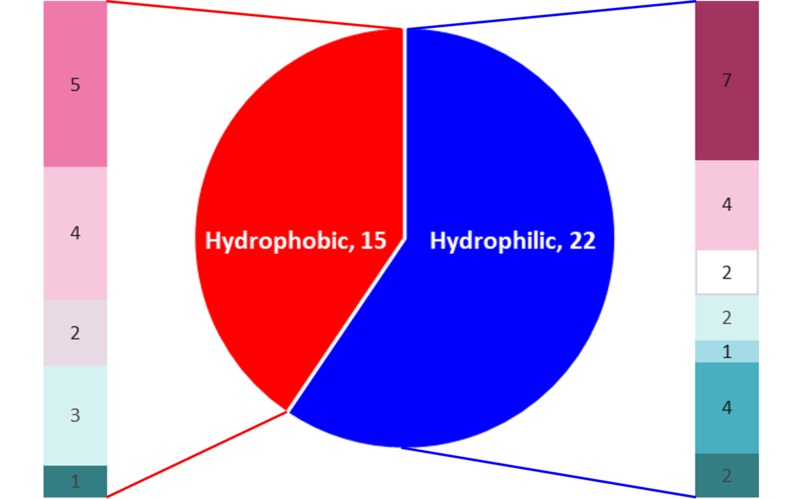
Unlike the IML3:CHL4 (L:N) interface, hydrophilic amino acids at the CHL4:MCM21 interface (N:O) are much more conserved.
Less and least conserved residues are found at the edges of the interface, indicating that the interactions among interfaces remain more or less common across species. This is also the case for IML3:CHL4 (L:N) interface.
🔔 All of the most conserved residues are hydrophilic in nature and less conserved residues are found at the surface of the interface.
Less conservation across CHL4:CTF19 (N:P)
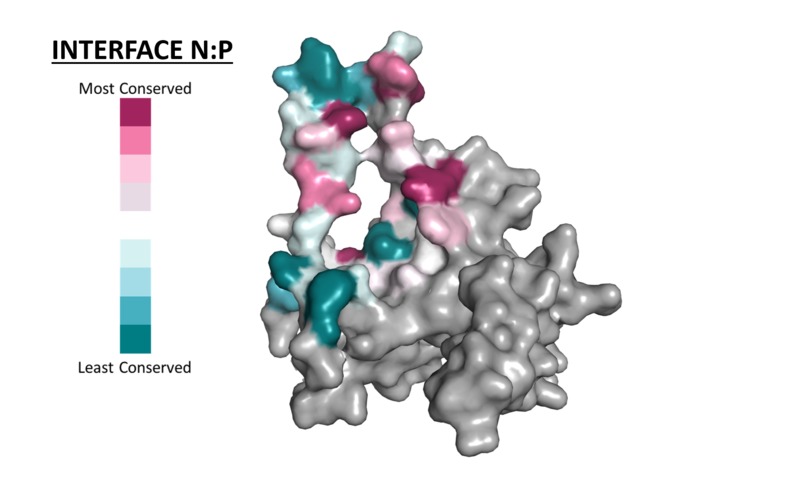
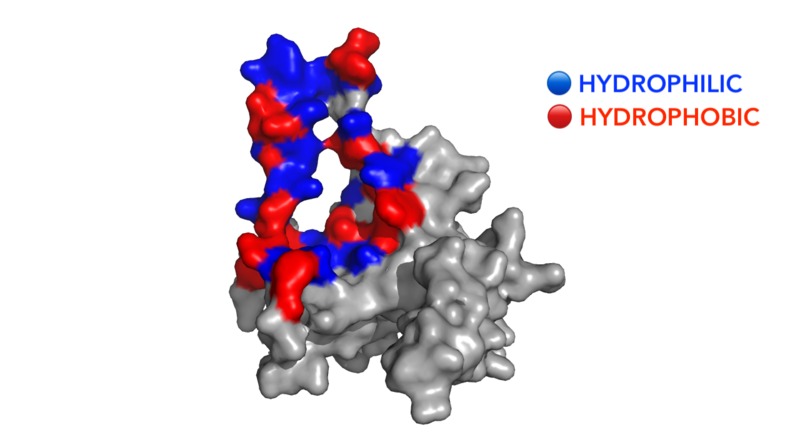
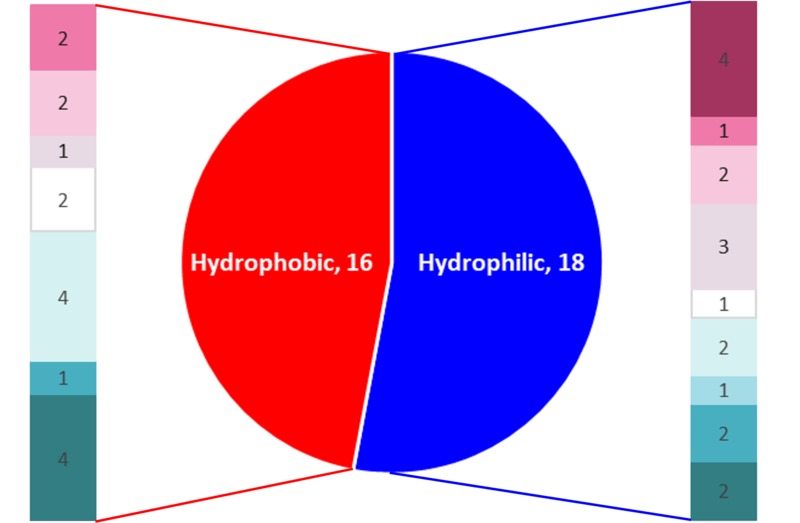
There is no region that is conserved particularly well at the CHL4:CTF19 (N:P) interface.
The most conserved residues are all hydrophilic in nature. However, at this interface, more residues varies across different species. The number and proportion of less conserved amino acids increases in both hydrophilic and hydrophobic nature, compared to the two interfaces mentioned above.
🔔 More less conserved amino acids are found at this interface although it contains the highest number of most conserved amino acids among three major interfaces.
🔔
In summary, hydrophilic residues in the CHL4 (Cenp-N) C-terminal generally seem to be more conserved in both numbers and extent. Despite this, none of these amino acids are involved in forming hydrogen bonds or salt bridges. Van der Waals' interactions however, are believed to occur within these residues to confer stability to the interfaces.
➜ To be continued...