
Structural Analysis based on examples
1) CTF19:MCM21 interface .
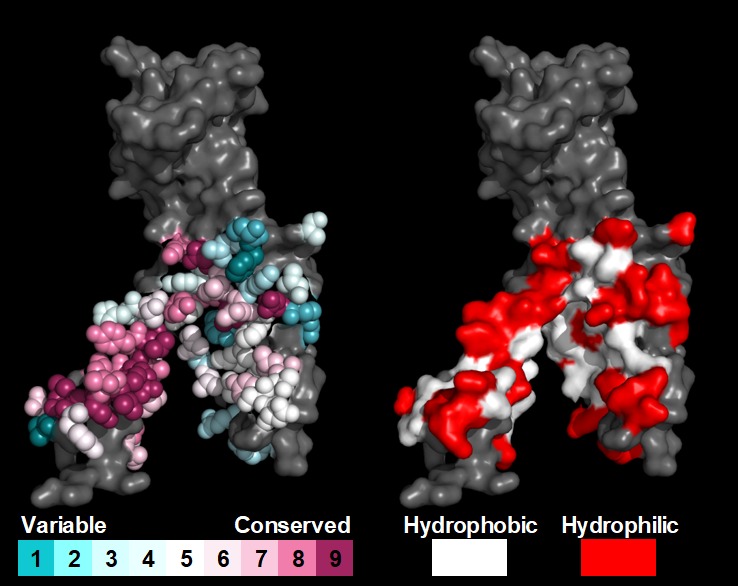
▻ From previous exhibit (👈Click it!), it is known that hydrogen bonds and salt bridges in CTF19:MCM21 interface are highly conserved which contribute to high binding affinity while Van der Waals interactions only contribute in a large quantity.
▻ CTF19:MCM21 motif was firstly identified as one complex and co-expressed in COMA assembly in previous studies. It functions as a branch for the assembly of related inner kinetochore subunits and is essential for accurate chromosome segregagion1.The high binding affinity between CTF19:MCM21 ensures its normal biological function.
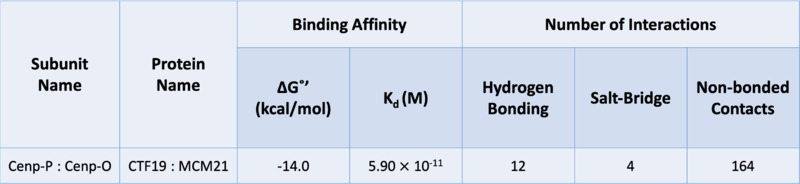
Binding affinity and number of interactions of CTF19:MCM21 interface
2) CTF19:CTF3 interface .
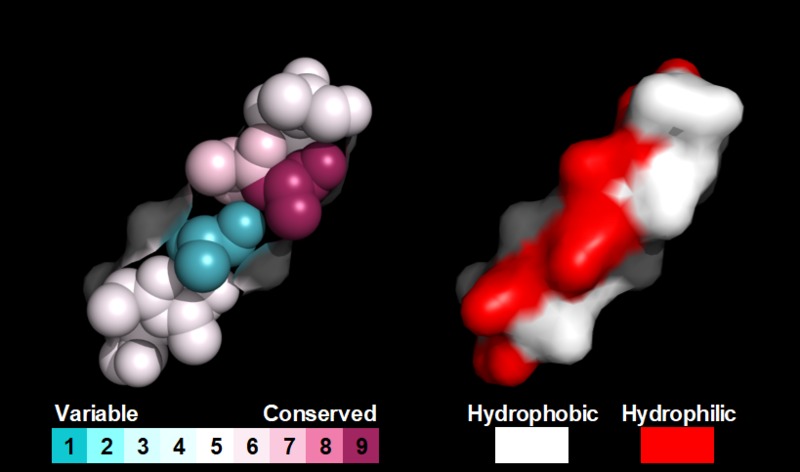
▻ CTF19:CTF3 complex shows low binding affinity without any hydrogen bond or salt bridge.
▻ Most of the residues involved in Van der Waals interactions have a low conservation degree (for more information click👉previous exihibit), indicating that merely forming Van Der Waals interactions is not enough to generate strong protein-protein binding.
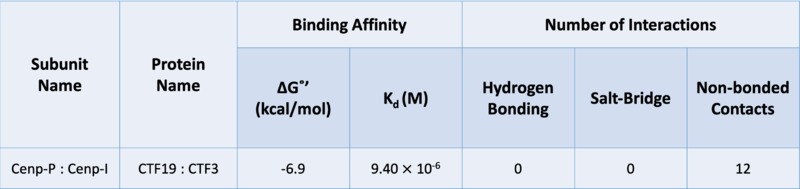
Binding affinity and number of interactions of CTF19:CTF3 interface
Reference
1. Schmitzberger F, Richter MM, Gordiyenko Y, Robinson C V, Dadlez M, Westermann S. Molecular basis for inner kinetochore configuration through RWD domain–peptide interactions . EMBO J. 2017;36(23):3458-3482. doi:10.15252/embj.201796636