
Summary
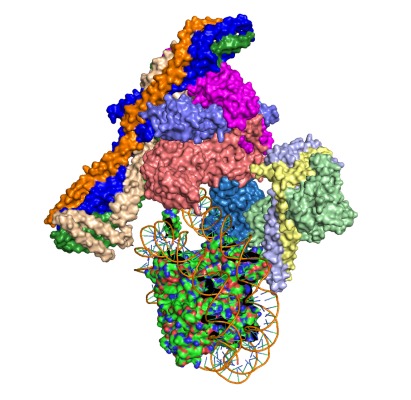
In general
- Large interfaces have higher affinities than small interfaces
- A positive correlation exists between interface area and biological importance
- For larger interfaces, hydrophobic interactions contribute more to binding affinity
- For smaller interfaces, the entropic effect of hydrophobicity can counter the loss of entropy due to high flexibility
- Electrostatic interactions do not contribute much to ΔG
We speculate that this is because
- Smaller interfaces release less water upon complex formation, thereby reducing the effect of hydrophobic interaction
- Some subunits are forced into contact due to the formation of other complexes.
We can see that some protein – protein interactions can be less energetically favourable than others due to the entropic aspects of binding. This can be affected by multiple molecular properties such as flexibility and conformational freedom, as well as hydrophobic surface areas.
In the CCAN complex, the constituent subunits range in size, shape, exposed residue composition and flexibility. Each of these factors determines the level of entropy loss upon complex formation; with smaller entropic loss equating to greater binding affinities. However, some exceptions to this rule exist, in which case affinity is more likely to be determined by other factors such as electrostatic interactions. The most significant aspect affecting entropy appears to be hydrophobicity. Overall, subcomplexes with higher ΔS interactions, tend to provide more significant contributions to the role of CCAN. Therefore, stable complexes are required for effective chromatid separation via attachment of the CCAN complex to chromatin and the KMN.